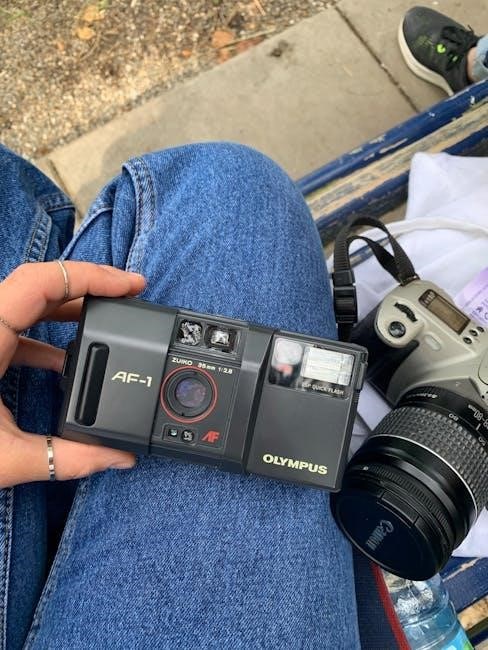
The Canon AE-1 Program, a popular 35mm SLR, boasts extensive documentation, including detailed manuals for testing and adjustment, readily available online in PDF format.
This camera, produced from 1976-1984, is considered beginner-friendly, despite its controls potentially seeming complex to those accustomed to modern digital interfaces.
Numerous resources, like guides from Butkus.org, and video tutorials, offer comprehensive instruction on operating this iconic film camera, aiding both new and experienced users.
Historical Context and Significance
Launched in 1984, the Canon AE-1 Program arrived as an evolution of the original AE-1, aiming to simplify operation for a broader audience. It represented a pivotal moment in Canon’s SLR development, embracing programmed auto-exposure – a relatively new feature at the time.
The camera’s significance lies in its accessibility; it democratized 35mm photography, making it approachable for amateurs. Extensive manuals, like those archived online, demonstrate Canon’s commitment to user support. The AE-1 Program’s popularity cemented Canon’s position as a leading camera manufacturer, influencing subsequent SLR designs.
Key Features and Specifications
The Canon AE-1 Program is a 35mm SLR featuring programmed auto-exposure, shutter priority, and manual modes. Its core specification includes a horizontally-traveling focal plane shutter (2-1/1000 sec) and a Canon FD mount for interchangeable lenses.
Manuals detail its compatibility with various Canon accessories like winders and flashes. The camera utilizes a TTL metering system and offers exposure compensation. Its robust build and user-friendly design, as explained in available guides, contributed to its enduring appeal.
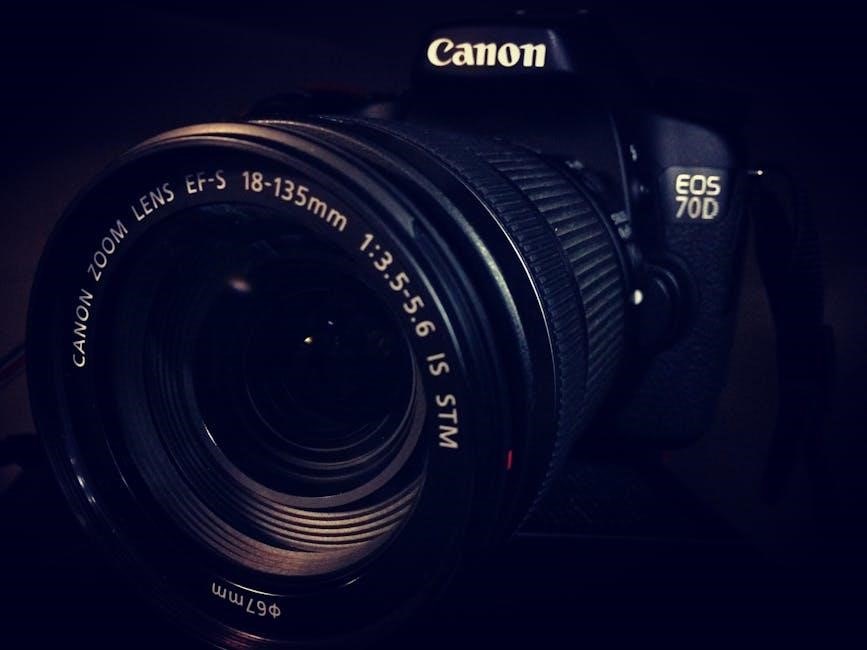
Understanding the Camera Body
The Canon AE-1 Program’s body houses essential controls and the viewfinder, detailed in manuals. Familiarizing yourself with the layout is key to operation and adjustments;
Guides illustrate film loading, button functions, and the information displayed within the viewfinder for accurate shooting.
Layout of Controls and Buttons
The Canon AE-1 Program features a logically arranged control layout, comprehensively documented in available manuals. Key elements include the shutter speed dial, aperture ring on the lens, and the mode selector switch – crucial for Program mode operation.
The film advance lever and rewind crank are positioned for comfortable use. Manuals detail the function of the self-timer button and depth-of-field preview lever. Understanding each control’s location and purpose, as illustrated in guides, is vital for mastering the camera’s capabilities.
Viewfinder Information and Display
The Canon AE-1 Program’s viewfinder provides essential shooting information. It displays shutter speed, aperture value (in Program mode), and a clear focusing spot. Manuals explain the LED indicators showing over/under exposure, aiding correct settings.
The viewfinder also incorporates a split-image focusing aid for precise manual focusing. Understanding these displayed elements, as detailed in the camera’s documentation, is crucial for achieving properly exposed and sharply focused photographs.
Film Loading and Unloading Procedure
The Canon AE-1 Program requires a specific film loading sequence. Open the back cover, insert the film canister, and thread the film leader to the take-up spool. Advance the film and close the back. Manuals detail proper tensioning.
Unloading involves releasing the film rewind knob and carefully winding the film back into the canister. Precise adherence to these steps, as outlined in the guide, prevents damage and ensures successful film usage.
Exposure Settings and Modes
The Canon AE-1 Program offers shutter speed and aperture control, alongside a convenient Program mode that automatically sets these for optimal exposure, as detailed in manuals.
Shutter Speed Control
The Canon AE-1 Program’s shutter speed is mechanically controlled, ranging from 2 seconds to 1/1000th of a second, offering versatility for various shooting conditions. Manuals detail how to adjust this via a dial located on the camera’s top plate.
This control dictates how long the film is exposed to light, impacting motion blur and overall image brightness; Understanding this is crucial for creative control, as explained in available guides.
In Program mode, the camera automatically selects the appropriate shutter speed, but manual control allows photographers to override this for specific artistic effects.
Aperture Control and Depth of Field
The Canon AE-1 Program utilizes aperture control, adjustable via the lens itself, influencing both image brightness and depth of field. Manuals illustrate how the f-stop setting affects the area in focus.
A wider aperture (lower f-number) creates a shallow depth of field, ideal for isolating subjects, while a narrower aperture (higher f-number) yields greater sharpness throughout the scene.
Understanding this relationship, detailed in online resources, is key to achieving desired photographic effects and controlling the visual narrative within your images.
Program Mode Explained
The Canon AE-1 Program’s signature feature is its Program Mode, automating both shutter speed and aperture selection for optimal exposure. Manuals detail how the camera analyzes light and chooses settings.
This mode simplifies shooting, particularly for beginners, allowing focus on composition and moment capture. However, users can override settings for creative control.
Online guides explain how Program Mode balances convenience with flexibility, making the AE-1 Program a versatile tool for various photographic scenarios and skill levels.
Focusing System
The Canon AE-1 Program relies on manual focusing, utilizing various focusing screen options to aid precision. Manuals provide techniques for sharp image acquisition.
Achieving accurate focus requires practice and understanding the relationship between the lens, viewfinder, and subject distance.
Manual Focusing Techniques
Mastering manual focus on the Canon AE-1 Program involves utilizing the split-image rangefinder in the viewfinder’s center. Aligning the blurred image halves creates sharpness.
Alternatively, employ microprism collar surrounding the split-image; a shimmering effect indicates near-focus. Practice consistently, observing the subject through the viewfinder while slowly rotating the focusing ring.
For distant subjects, pre-setting the focus to infinity is useful. Remember depth of field impacts sharpness; smaller apertures increase it, easing focusing precision.
Focusing Screen Options
The Canon AE-1 Program typically features a standard focusing screen with a split-image rangefinder and microprism collar, aiding manual focus.
While not extensively documented in readily available manuals, aftermarket focusing screens were available, offering different grid patterns or focusing aids.
These alternative screens could enhance specific shooting styles, like landscape or macro photography. However, compatibility and installation require careful consideration, and original screens are generally reliable.
Using the Light Meter
The AE-1 Program’s light meter is central to operation, offering various metering modes. Understanding exposure compensation is crucial for accurate results, as detailed in available guides.
Metering Modes and Their Application
The Canon AE-1 Program offers several metering modes to suit diverse shooting scenarios. Averaging metering, the default, evaluates the entire frame for exposure, ideal for general scenes. Spot metering concentrates on a small area, useful for challenging lighting or specific subject emphasis.
Center-weighted averaging prioritizes the center of the frame, balancing overall brightness with subject importance. Manuals detail how to select these modes via a lever on the camera body, ensuring correct exposure based on the chosen method and scene conditions.
Understanding Exposure Compensation
Exposure compensation on the Canon AE-1 Program allows photographers to override the camera’s automatic metering. This is crucial when shooting scenes with extreme brightness or darkness, like snow or backlit subjects.
The camera features a +/- 2 stop compensation range, adjustable via a dial. Manuals explain using positive compensation to brighten images and negative to darken them, ensuring accurate exposure when the camera’s meter is fooled by unusual lighting conditions.
Advanced Features
The Canon AE-1 Program offers features like depth of field preview and a self-timer, enhancing creative control. Manuals detail their operation for advanced photographic techniques.
Depth of Field Preview
The Canon AE-1 Program’s depth of field preview allows photographers to visualize the area of acceptable sharpness before taking the picture. This is achieved by pressing a button near the lens mount, which stops down the aperture to the selected f-stop.
Manuals emphasize this feature’s importance for landscape and portrait photography, ensuring critical focus. Previewing allows precise control over how much of the scene appears sharp, aiding artistic vision and technical accuracy. It’s a valuable tool for mastering focus and creative image composition.
Self-Timer Functionality
The Canon AE-1 Program features a self-timer, activated by a lever located near the shutter release. Engaging this lever initiates a 10-second delay before the shutter fires, allowing the photographer to become part of the image.
Manuals detail its use for group photos or situations requiring hands-free operation. The lever returns to its original position automatically after the exposure, ready for immediate reuse. It’s a simple yet effective feature for various photographic scenarios.
Troubleshooting Common Issues
Canon AE-1 Program manuals address potential problems like film advance issues and light meter malfunctions, offering diagnostic steps and solutions for camera repair.
These guides assist users in identifying and resolving common operational difficulties, ensuring continued functionality of this classic SLR.
Problems with Film Advance
The Canon AE-1 Program manual details troubleshooting steps for film advance issues, a common concern for users. Potential causes include incorrect film loading, a worn-out film advance mechanism, or obstructions within the camera body.
The manual instructs users to verify proper film threading and check for any visible damage to the advance lever or gears. It also suggests professional servicing if self-diagnosis fails, emphasizing the importance of maintaining the camera’s mechanical components for reliable operation.
Regular cleaning and careful handling, as outlined in the manual, can help prevent these issues.
Light Meter Malfunctions
The Canon AE-1 Program manual provides guidance for addressing light meter inaccuracies. Common issues include a drained battery, incorrect ISO setting, or a faulty meter itself. The manual stresses the importance of using a fresh battery and verifying the film speed is correctly inputted;
If problems persist, the manual suggests testing with different lighting conditions and comparing readings to a known accurate meter. Professional repair is recommended for internal meter failures, ensuring precise exposure measurements.
Regular checks, as detailed in the manual, are crucial.
Maintenance and Care
The Canon AE-1 Program manual emphasizes regular cleaning of the lens and body. Proper battery replacement, utilizing the correct type, is also crucial for optimal performance.
Consistent care ensures longevity.
Cleaning the Lens and Body
The Canon AE-1 Program manual details proper cleaning procedures to maintain optimal image quality and camera functionality. For the lens, use a soft, lint-free cloth and lens cleaning solution, applying gentle circular motions.
Avoid harsh chemicals or abrasive materials that could damage the coating. The camera body should be cleaned with a dry or slightly damp cloth, focusing on removing dust and fingerprints.
Pay attention to the film chamber and viewfinder window. Regular cleaning prevents dust buildup and ensures reliable operation, preserving the camera’s value and performance for years to come.
Battery Replacement and Type
The Canon AE-1 Program utilizes a 4LR44 or equivalent 6V alkaline battery to power its electronic functions, including the light meter and shutter speed display. The manual emphasizes correct battery installation, noting the polarity markings within the battery compartment.
Replacing the battery is straightforward, but ensure the compartment is securely closed to maintain proper electrical contact.
Using a fresh battery guarantees accurate exposure readings and reliable camera operation, crucial for consistent film photography results.
Accessories and Compatibility
The Canon AE-1 Program accepts FD mount lenses and is compatible with accessories like the Canon Winder and various flash units, enhancing functionality.
Kamerastore offers a wide selection of film camera accessories, potentially including those suitable for this classic Canon SLR.
Compatible Lenses (FD Mount)
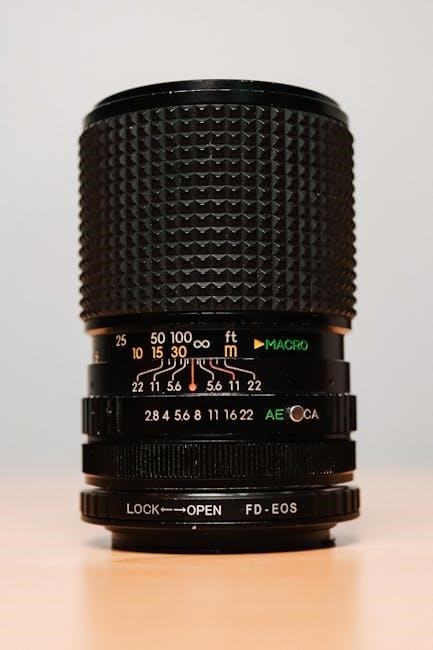
The Canon AE-1 Program utilizes the Canon FD (Flange Distance) mount, a bayonet-style system renowned for its robust build and optical quality. This mount accommodates a vast array of Canon FD lenses, ranging from wide-angle to telephoto options.
These lenses are categorized into three sub-mounts: R (non-SSC), nFD (New FD with SSC – Super Spectra Coating), and FDn (FD New, with breech-lock aperture control). While all FD lenses are physically compatible, the nFD and FDn lenses offer improved coatings and operational features.
Users can explore vintage FD lenses for unique character or newer FD lenses for enhanced performance, expanding creative possibilities with the AE-1 Program.
Optional Accessories (Winder, Flash)
The Canon AE-1 Program benefits from several optional accessories enhancing functionality. Canon offered dedicated motor winders, like the Servo Winder A and Power Winder A, enabling continuous shooting for action photography. These winders require a separate power supply.
Various Canon Speedlite flashes are compatible, providing supplemental lighting for diverse shooting scenarios. A dedicated flash adapter may be needed for certain models. Additionally, remote shutter releases and lens filters further expand the camera’s capabilities.
Exploring these accessories unlocks the AE-1 Program’s full potential.
Resources and Further Learning
Online manuals and guides, such as those found on Butkus.org, alongside vibrant film photography communities, provide invaluable support for AE-1 Program users.
Numerous video tutorials demonstrate operation, while dedicated forums foster knowledge sharing and troubleshooting assistance.
Online Manuals and Guides
A wealth of resources exists online for Canon AE-1 Program users seeking detailed guidance. Butkus.org hosts a comprehensive, freely downloadable manual, offering in-depth instructions and diagrams.
These guides cover everything from basic operation to advanced testing and adjustment procedures, proving invaluable for both beginners and experienced photographers.
Furthermore, archived documents, like the Canon AE1 SPT guide, provide supplementary information, enhancing understanding of the camera’s functionalities and features. These resources are essential for maximizing the AE-1 Program’s potential.
Film Photography Communities
Engaging with film photography communities offers invaluable support for Canon AE-1 Program users. Online forums and groups provide platforms to ask questions, share experiences, and troubleshoot issues;
These communities often feature dedicated threads discussing the AE-1 Program specifically, offering tailored advice and solutions.
Connecting with fellow enthusiasts fosters learning and provides access to collective knowledge, supplementing the information found in manuals and guides, ultimately enhancing the photographic journey.
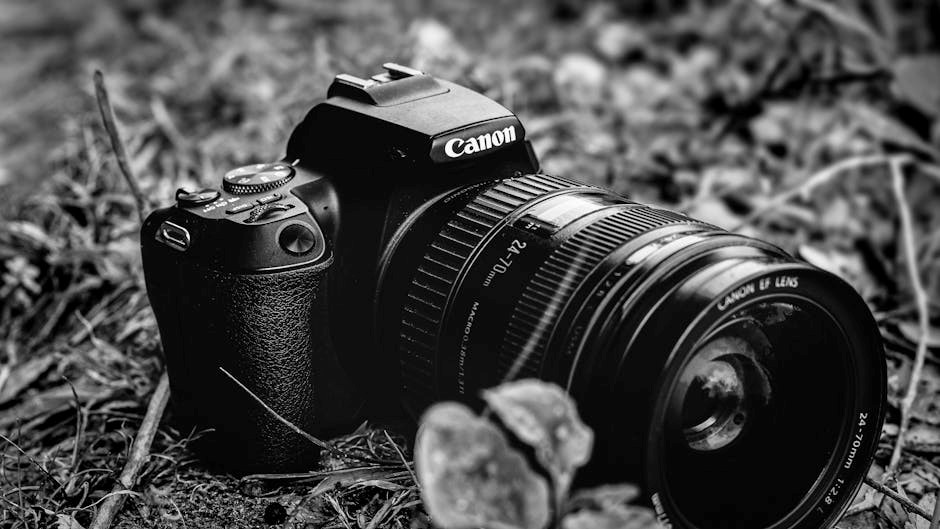
Canon AE-1 Program vs; AE-1
The AE-1 Program represents an upgrade over the original AE-1, featuring a programmed exposure mode for simplified operation, as detailed in available manuals.
This enhancement offers convenience, while both models share core functionalities and compatibility with FD mount lenses.
Key Differences and Upgrades
The primary distinction lies in the AE-1 Program’s programmed shooting mode, automating both aperture and shutter speed selection for ease of use, as explained in various manuals.
Unlike the original AE-1, which primarily relies on user-defined settings, the Program version simplifies exposure, making it more accessible to beginners.
However, both cameras retain full manual control, allowing experienced photographers to override the programmed mode when desired. The AE-1 Program’s manual details these options.
Essentially, the Program model adds convenience without sacrificing the creative control offered by its predecessor, enhancing usability through automation.
Which Model is Right for You?
For beginners, the AE-1 Program, with its automated programmed mode detailed in the manual, offers a gentler learning curve, simplifying exposure settings and fostering confidence.
Experienced photographers who prefer full manual control and enjoy a more hands-on approach might favor the original AE-1, offering greater creative flexibility.
Both cameras are capable of excellent results; the choice depends on your shooting style and comfort level with manual settings, as outlined in online guides.
Ultimately, either model provides a fantastic entry point into the world of film photography, offering a blend of reliability and classic Canon quality.
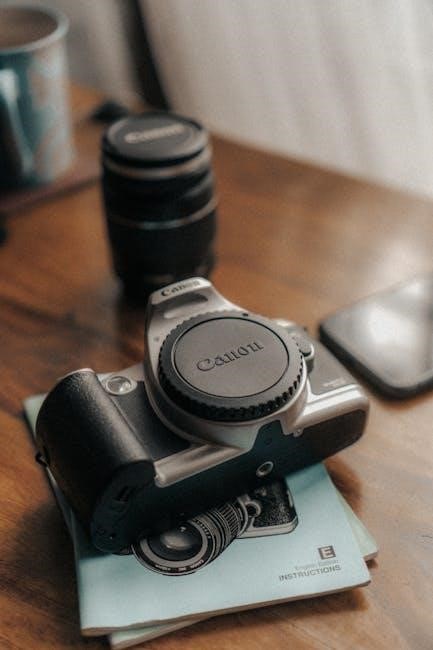
Legacy and Continued Use Today
The Canon AE-1 Program remains popular in modern film photography, supported by readily available manuals and a thriving community of enthusiasts.
Used models are frequently purchased, offering an accessible entry point into 35mm film, thanks to plentiful online resources and guides.
The AE-1 Program in Modern Film Photography
The Canon AE-1 Program continues to thrive within the resurgent film photography movement, appreciated for its blend of accessibility and capability. Its enduring appeal is bolstered by the wealth of readily available documentation, including comprehensive manuals accessible online.
Many photographers, both novice and experienced, choose the AE-1 Program as their first foray into manual film shooting, benefiting from its user-friendly design and robust construction. The camera’s legacy is sustained by active online communities and plentiful resources, ensuring continued support and knowledge sharing for its users.
Finding and Purchasing a Used AE-1 Program
Locating a used Canon AE-1 Program is achievable through various online marketplaces and camera stores specializing in film equipment. When purchasing, carefully assess the camera’s condition, paying attention to the shutter, light meter, and film advance mechanisms.
Referencing the detailed Canon AE-1 Program manual available online can aid in identifying potential issues during inspection. Expect prices to vary based on condition and included accessories; thorough research ensures a worthwhile investment in this classic camera.
Leave a Reply
You must be logged in to post a comment.