
Mitsubishi Air Conditioner Troubleshooting Guide
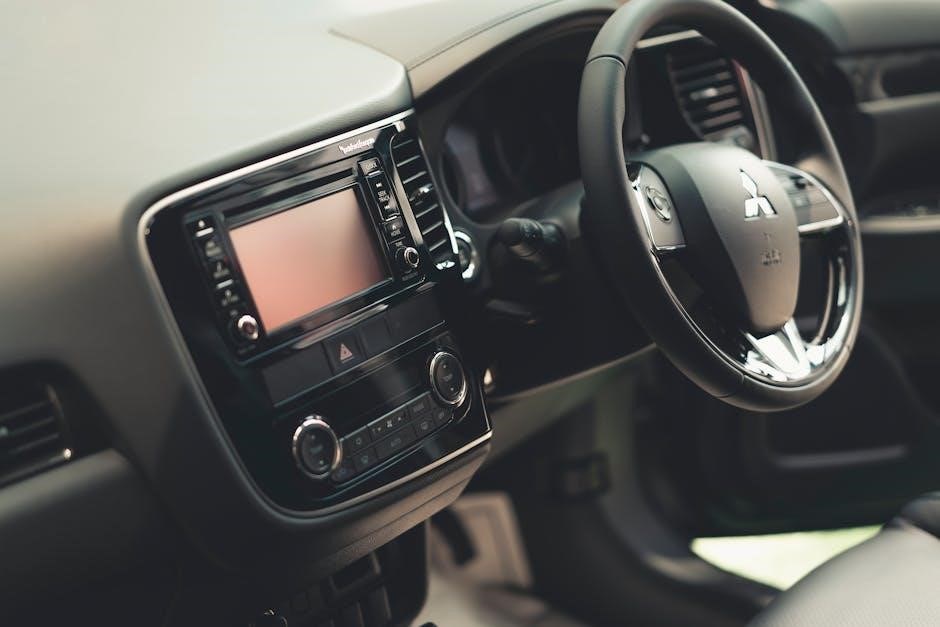
Navigating Mitsubishi AC issues? Access comprehensive PDF resources detailing error codes, wiring diagrams, and component diagnostics for effective troubleshooting and repair solutions.
Successfully diagnosing and resolving issues with your Mitsubishi air conditioning system requires a systematic approach, often aided by readily available resources. This guide serves as an introduction to understanding common problems and utilizing troubleshooting techniques. A crucial component of effective repair is accessing detailed documentation, specifically Mitsubishi’s official PDF troubleshooting guides.
These PDFs contain vital information, including comprehensive error code lists, detailed explanations of flashing light patterns on indoor and outdoor units, and schematics for electrical wiring and printed circuit boards. Understanding these resources empowers both homeowners and technicians to pinpoint the root cause of malfunctions, ranging from simple remote controller failures to complex refrigerant leaks or compressor errors. Familiarizing yourself with these documents before beginning any repair work is highly recommended for safety and efficiency.
Understanding Error Codes
Mitsubishi AC systems utilize a sophisticated error code system to signal malfunctions, displayed through flashing lights on the indoor and outdoor units. These codes, extensively documented in official PDF troubleshooting guides, are essential for accurate diagnosis. Each code corresponds to a specific problem, ranging from communication failures to compressor issues or sensor errors.
Decoding these codes isn’t about memorization; it’s about referencing the PDF documentation. The guides detail the flashing patterns – how many times the RUN or TIMER lights flash, and whether they flash continuously or intermittently. This information directs you to the specific error and its potential causes. Ignoring error codes and attempting random fixes can lead to further damage. Always consult the PDF to understand the precise meaning of each code before proceeding with any repair attempts.
Locating the Error Code
Identifying the error code is the first step in troubleshooting your Mitsubishi AC. The method for locating it depends on whether the issue originates in the indoor or outdoor unit, as detailed in the system’s PDF manual. Typically, error codes are displayed as a series of flashes from the RUN and TIMER indicator lights on both units.
The PDF guides provide specific instructions on interpreting these flashing patterns. For instance, a continuously flashing light might indicate a different error than a light that flashes a set number of times and then pauses. Carefully observe the lights and consult the corresponding table within the PDF. Knowing which unit displays the code is crucial, as it narrows down the potential source of the problem. Accurate code identification, guided by the PDF, is vital for effective repair.
Indoor Unit Error Code Display
Locating the error code on the indoor unit involves observing the RUN and TIMER indicator lights. The PDF troubleshooting manual details how various flashing patterns correspond to specific error codes. For example, issues with the room temperature thermistor (like code P1) are indicated by specific flash sequences.
The PDF will illustrate how many times each light flashes, and whether it’s a continuous or intermittent pattern. These patterns signal problems ranging from fan motor errors to communication failures. Referencing the PDF’s table is essential for accurate interpretation. Note whether the unit is displaying a black or red error code, as this can also be a key identifier. The PDF provides a visual guide to help decipher these signals quickly and efficiently.
Outdoor Unit Error Code Display
Identifying error codes on the outdoor unit typically involves observing flashing lights on the circuit board. The Mitsubishi Heavy Industries PDF guides users through interpreting these signals, often related to power supply issues or circuit board faults. A lack of mains power, or a faulty outdoor unit circuit board, will present distinct flashing patterns as detailed in the manual.
The PDF resource outlines how to differentiate between issues like power failures and internal component malfunctions; It emphasizes that consistent flashing or a lack of response from the lights are critical indicators. The PDF also clarifies the meaning of codes related to refrigerant levels and compressor errors. Always consult the PDF for the specific flashing sequence and corresponding error code to ensure accurate diagnosis and repair.
Common Mitsubishi AC Error Codes & Solutions
Mitsubishi AC error codes, detailed in comprehensive PDF guides, pinpoint specific issues. For example, E01 signals a remote controller communication failure – check wiring. E03 indicates indoor/outdoor unit communication problems, often requiring a system reset. E43, a critical code, suggests a refrigerant leak or restriction, demanding professional attention.
The PDF resources explain that E56 relates to inverter compressor errors, potentially needing compressor replacement. P1 flags a room temperature thermistor abnormality. These guides provide step-by-step solutions, from simple wiring checks to complex component replacements. Always refer to the PDF for detailed diagnostic procedures and safety precautions before attempting any repairs. Proper use of the PDF ensures accurate troubleshooting and restores optimal AC performance.
E01: Remote Controller Communication Failure
Error code E01, as detailed in Mitsubishi AC PDF troubleshooting guides, signifies a breakdown in communication between the indoor unit and the remote controller. The PDF directs users to first inspect the wiring connecting these components, ensuring secure connections and no visible damage. A faulty wired remote controller is a common cause, necessitating testing or replacement.
Further PDF guidance suggests verifying the remote controller’s power supply and settings. Interference from other devices can also trigger this error; try relocating the indoor unit. If the issue persists, the PDF recommends checking the indoor unit’s control board for potential malfunctions. Always consult the PDF’s wiring diagrams for accurate identification and safe troubleshooting procedures before attempting any electrical work.
E02: Duplicate Indoor Unit Address
Mitsubishi AC PDF troubleshooting manuals identify E02 as a communication error stemming from duplicate addresses assigned to indoor units within a multi-split system. This typically occurs during installation or after address changes. The PDF stresses the importance of unique addresses for each indoor unit to ensure proper system operation.
To resolve this, the PDF instructs technicians to access the system’s settings via the outdoor unit’s control board and verify each indoor unit’s assigned address. Any duplicates must be corrected, assigning a unique numerical value to each. Detailed instructions within the PDF outline the address setting procedure. Incorrect addressing can lead to intermittent operation or complete system failure, making address verification crucial, as highlighted in the PDF guides.
E03: Indoor and Outdoor Unit Communication Error
Mitsubishi AC PDF troubleshooting resources pinpoint E03 as a critical communication failure between the indoor and outdoor units. The PDF details this can arise from several factors, including wiring issues, a faulty control board in either unit, or interference disrupting the signal. The PDF emphasizes a systematic approach to diagnosis.
Technicians should first verify the wiring connections between the units, checking for loose connections or damaged cables, as detailed in the PDF’s wiring diagrams. The PDF also recommends testing the communication wire for continuity. If wiring is sound, the PDF guides users to inspect the control boards for errors. A replacement board may be necessary. The PDF stresses that resolving E03 is vital for restoring full system functionality and preventing further damage.
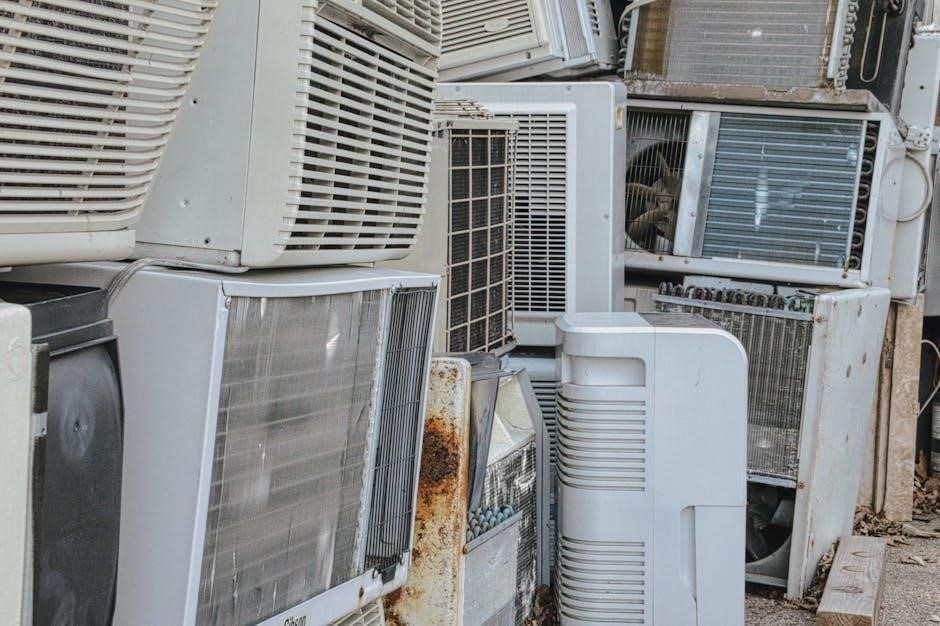
E04: Outdoor Unit Overcurrent Protection
Mitsubishi AC PDF guides identify E04 as an overcurrent protection activation within the outdoor unit. This indicates the system detected excessive current draw, triggering a safety shutdown. The PDF highlights potential causes: a locked rotor compressor, a faulty fan motor, or wiring problems. The PDF stresses safety first – disconnect power before inspection.
The PDF’s troubleshooting steps involve checking the compressor and fan motor for obstructions or mechanical failures. Electrical testing, guided by the PDF’s diagrams, is crucial to identify short circuits or open wiring. The PDF warns against bypassing the overcurrent protection without addressing the root cause. A qualified technician should diagnose and repair the issue, potentially replacing the compressor, fan motor, or damaged wiring, as detailed in the PDF’s component sections.
E05: Compressor Overload Protection
Mitsubishi AC PDF documentation details E05 as compressor overload protection activation. This signifies the compressor is overheating, triggering a safety shutdown to prevent damage. The PDF explains causes include insufficient refrigerant, restricted airflow, or a failing compressor. The PDF emphasizes disconnecting power before any inspection.
Troubleshooting, as outlined in the PDF, begins with verifying proper refrigerant levels and checking for airflow obstructions in both indoor and outdoor units. The PDF’s wiring diagrams aid in inspecting compressor windings for shorts or opens. A PDF-guided check of the compressor’s thermistor is also recommended. The PDF cautions against restarting the system repeatedly, as this can worsen the overload. A qualified technician, using the PDF’s detailed component information, should diagnose and potentially replace the compressor or address refrigerant/airflow issues.
E06: Inverter Compressor Drive Element Error
Mitsubishi AC PDF guides identify E06 as an error relating to the inverter compressor’s drive element – typically the IPM (Intelligent Power Module). The PDF states this indicates a fault within the inverter circuitry controlling compressor speed. Troubleshooting, per the PDF, requires specialized knowledge and equipment.
The PDF stresses the danger of high voltages within the inverter and advises only qualified technicians attempt diagnosis. The PDF’s electrical diagrams are crucial for testing the IPM and associated components. Common causes, detailed in the PDF, include a faulty IPM, capacitor issues, or problems with the control board. Replacement of the IPM, guided by the PDF’s component specifications, is often necessary. The PDF warns against attempting repairs on the IPM itself, recommending full module replacement for reliability and safety.
E07: Compressor Stalling
Mitsubishi AC PDF documentation details E07 as a compressor stalling error, often linked to insufficient refrigerant or restrictions within the refrigerant circuit. The PDF highlights that overheating due to increased friction, potentially indicating a seizing compressor, can also trigger this code. Accurate diagnosis, as outlined in the PDF, requires checking refrigerant levels and pressures.

The PDF emphasizes verifying proper airflow across both indoor and outdoor units, especially during high ambient temperatures. Electrical checks, guided by the PDF’s wiring diagrams, should confirm correct voltage supply to the compressor. The PDF also suggests inspecting the compressor’s start and run capacitors. A seized compressor, as detailed in the PDF, necessitates compressor replacement, while refrigerant issues require leak detection and repair, followed by a recharge, referencing the PDF’s specified refrigerant type and quantity.
E08: High Pressure Switch Activation
Mitsubishi AC PDF guides indicate E08 signifies activation of the high-pressure switch, typically due to excessively high refrigerant pressure. The PDF stresses this can stem from airflow obstruction across the condenser coil, restricting heat dissipation. Detailed diagrams within the PDF assist in locating and inspecting the condenser for debris or blockage.
The PDF also points to potential issues like overcharging of the refrigerant system or a malfunctioning condenser fan motor as contributing factors. Electrical testing of the fan motor, guided by the PDF’s schematics, is crucial. The PDF cautions against bypassing the high-pressure switch; instead, the root cause must be addressed. Proper refrigerant charge, as specified in the PDF, and unobstructed airflow are essential. The PDF recommends professional servicing for refrigerant handling and system evaluation to prevent further damage.
E09: Low Pressure Switch Activation
According to Mitsubishi AC PDF troubleshooting manuals, error code E09 indicates activation of the low-pressure switch. The PDF details this often results from insufficient refrigerant charge within the system, causing low suction pressure. The PDF’s diagrams aid in locating the service ports for pressure checks.
However, the PDF also highlights potential causes beyond refrigerant levels, including restrictions within the refrigerant lines – such as a kinked line or a faulty expansion valve. The PDF provides illustrations for identifying these components. Air or non-condensables within the refrigerant circuit, as detailed in the PDF, can also trigger this error. The PDF strongly advises against attempting to recharge the system without proper training and equipment. Professional diagnosis and repair, guided by the PDF’s specifications, are crucial to avoid system damage and ensure optimal performance.
E11: Outdoor Unit Fan Motor Error
The Mitsubishi AC PDF troubleshooting guides identify E11 as an error relating to the outdoor unit’s fan motor. The PDF specifies this can manifest as the fan failing to start, running intermittently, or operating at an incorrect speed. Detailed wiring diagrams within the PDF assist in tracing the electrical connections to the fan motor and associated components.
The PDF outlines several potential causes, including a faulty fan motor itself, a defective capacitor, or issues with the control board. The PDF includes resistance charts for testing the motor windings and capacitor. Obstructions preventing fan rotation, as illustrated in the PDF, should also be checked. The PDF cautions against attempting repairs without proper electrical knowledge and emphasizes the importance of disconnecting power before any inspection. Professional service, utilizing the PDF’s diagnostic procedures, is recommended for complex issues.
E12: Indoor Unit Fan Motor Error
According to the Mitsubishi AC PDF troubleshooting manuals, error code E12 signals a problem with the indoor unit’s fan motor. The PDF details that this error can present as a complete fan failure, slow or erratic operation, or unusual noises. The PDF’s wiring diagrams are crucial for tracing the electrical pathways to the fan motor and its control components.
The PDF lists common causes, including a defective fan motor, a faulty capacitor, or a malfunctioning control board. The PDF provides instructions for testing the motor windings and capacitor using a multimeter, along with expected resistance values. The PDF also highlights the need to check for obstructions hindering fan movement. It strongly advises against DIY repairs without sufficient electrical expertise and stresses the importance of disconnecting power before any inspection. Consulting a qualified technician, guided by the PDF’s diagnostic steps, is recommended for complex repairs.
E13: Temperature Sensor Error (Indoor Unit)
The Mitsubishi AC PDF troubleshooting guides identify E13 as an error related to the indoor unit’s temperature sensor. The PDF explains this indicates the sensor is providing incorrect readings to the control board, disrupting proper operation. The PDF’s detailed schematics are vital for locating the sensor’s precise position within the unit.
According to the PDF, potential causes include a faulty sensor, damaged wiring, or a loose connection. The PDF instructs users to test the sensor’s resistance using a multimeter, comparing the reading to the values specified in the PDF’s technical data section. The PDF emphasizes checking the wiring harness for breaks or corrosion; It cautions against attempting repairs if unfamiliar with electrical work. The PDF recommends professional assistance for sensor replacement and calibration, ensuring accurate temperature monitoring and optimal AC performance. Always disconnect power before inspection, as detailed in the PDF’s safety guidelines.
E14: Temperature Sensor Error (Outdoor Unit)
Mitsubishi AC PDF troubleshooting documentation details E14 as a temperature sensor error within the outdoor unit. The PDF highlights that this error disrupts the system’s ability to accurately monitor discharge or suction temperatures, impacting compressor performance and potentially leading to damage. The PDF’s wiring diagrams are crucial for identifying the sensor’s location.
The PDF lists common causes as a defective sensor, compromised wiring, or a poor connection. It instructs users to utilize a multimeter to verify the sensor’s resistance, referencing the correct values outlined in the PDF’s specifications. The PDF advises a thorough inspection of the wiring harness for signs of corrosion or breaks. The PDF strongly recommends professional intervention for sensor replacement and calibration, ensuring precise temperature readings. Always prioritize safety by disconnecting power before any inspection, as emphasized in the PDF’s safety section. Ignoring this error can lead to compressor failure, as detailed in the PDF.
E15: Discharge Temperature Sensor Error
Mitsubishi AC PDF guides pinpoint E15 as a critical error indicating a malfunction in the discharge temperature sensor. This sensor monitors the refrigerant temperature leaving the compressor, vital for system protection. The PDF stresses that inaccurate readings can trigger false shutdowns or, conversely, allow the compressor to overheat. Detailed wiring schematics within the PDF aid in locating the sensor.
The PDF identifies potential causes: a faulty sensor, damaged wiring, or a loose connection. It instructs technicians to use a multimeter to test the sensor’s resistance against values specified in the PDF’s technical data. The PDF emphasizes checking for corrosion or breaks in the wiring harness. Replacement requires precise calibration, as outlined in the PDF. Ignoring E15 can lead to compressor damage, a scenario thoroughly explained in the PDF’s troubleshooting section. Always disconnect power before inspection, a crucial safety step detailed in the PDF.
E16: Suction Temperature Sensor Error
Mitsubishi AC PDF documentation defines error code E16 as a fault within the suction temperature sensor circuit. This sensor measures refrigerant temperature entering the compressor, crucial for preventing evaporator coil freezing and compressor damage. The PDF highlights that inaccurate readings can lead to inefficient cooling or system shutdown. Detailed diagrams within the PDF illustrate sensor location and wiring.
The PDF lists common causes: a defective sensor, compromised wiring, or a poor connection. Technicians are guided to use a multimeter to verify sensor resistance against specifications detailed in the PDF’s technical charts. The PDF advises inspecting wiring for corrosion or breaks. Replacement procedures, including proper calibration, are clearly outlined in the PDF. Ignoring E16 risks evaporator coil damage and compressor failure, scenarios thoroughly covered in the PDF’s diagnostic section. Remember to disconnect power before any inspection, a safety precaution emphasized in the PDF.
E22: Microcomputer Error
Mitsubishi AC PDF guides identify E22 as a critical internal error indicating a malfunction within the unit’s central processing unit (CPU) or microcomputer. This PDF emphasizes that E22 doesn’t pinpoint a specific component failure, but rather a systemic issue requiring advanced diagnostics. The PDF details that this error often stems from corrupted firmware or a hardware fault on the control board.
The PDF instructs technicians to first attempt a power cycle – disconnecting power for several minutes – to potentially reset the system. If E22 persists, the PDF recommends checking for proper voltage supply to the control board. Further troubleshooting, as outlined in the PDF, involves inspecting the board for physical damage and potentially replacing the entire PCB assembly. The PDF warns that attempting to repair the microcomputer itself is generally not recommended. This error often necessitates professional service, a point repeatedly stressed within the PDF’s safety and repair sections.
E43: System Error ‒ Refrigerant Leak/Restriction
Mitsubishi AC PDF troubleshooting guides flag E43 as a serious system error, strongly suggesting either a refrigerant leak or a restriction within the refrigerant circuit. The PDF details that insufficient cooling, often caused by these issues, triggers this code. It emphasizes checking for airflow problems on both the indoor and outdoor units, as these can mimic refrigerant-related symptoms.
The PDF instructs technicians to first verify refrigerant levels using appropriate gauges. If low, leak detection methods (electronic leak detectors, bubble solutions) are detailed in the PDF. The PDF also outlines procedures for identifying restrictions, including checking filter driers and expansion valves; Overheating of the compressor due to increased friction, potentially indicating compressor seizure, is also addressed in the PDF. Accurate thermistor readings are crucial, as faulty readings can falsely trigger E43, as explained within the PDF’s diagnostic section. Professional handling of refrigerant is strongly advised throughout the PDF.
E52: EEPROM Error
Mitsubishi AC PDF documentation identifies E52 as an EEPROM (Electrically Erasable Programmable Read-Only Memory) error. This indicates a problem with the control board’s memory, where critical system settings are stored. The PDF stresses that this is typically a hardware failure requiring board replacement, rather than a user-fixable issue.

The PDF troubleshooting steps involve verifying power supply stability to the control board. However, the primary solution detailed in the PDF is replacing the PCB (Printed Circuit Board). The PDF cautions against attempting to reprogram the EEPROM without specialized equipment and knowledge. It highlights that data corruption within the EEPROM can lead to unpredictable system behavior. The PDF also notes that a faulty EEPROM can sometimes manifest as other error codes, making accurate diagnosis crucial. Always consult the PDF’s wiring diagrams before any board replacement, ensuring correct connections.
E53: Communication Error (PCB)
According to Mitsubishi AC PDF guides, error code E53 signifies a communication failure between the Printed Circuit Boards (PCBs) within the system. The PDF details this often points to a problem with the control board’s ability to transmit or receive signals, impacting overall system operation. Troubleshooting, as outlined in the PDF, begins with checking the wiring connections between the indoor and outdoor unit PCBs.
The PDF emphasizes verifying the communication cable for damage or loose connections. Further PDF instructions suggest testing the PCB itself for continuity and voltage levels, requiring a multimeter. If wiring is sound, the PDF indicates a likely PCB failure necessitating replacement. The PDF warns against attempting repairs on the PCB itself due to the complexity of the circuitry. Proper identification of the faulty PCB, using the PDF’s diagrams, is crucial before ordering a replacement part. Always disconnect power before inspecting or replacing any components, as detailed in the safety section of the PDF.
E56: Inverter Compressor Error
The Mitsubishi AC PDF troubleshooting guides identify error code E56 as an issue specifically related to the inverter compressor. This PDF documentation indicates a fault within the compressor drive element or the inverter module itself. Initial steps, as detailed in the PDF, involve checking the DC voltage supplied to the compressor; abnormal readings suggest a power supply problem or inverter failure.
The PDF further instructs technicians to inspect the compressor’s wiring harness for loose connections or damage. Advanced diagnostics, outlined in the PDF, require specialized equipment to test the inverter module’s components. A failing inverter module often necessitates replacement, as detailed in the PDF’s parts list. The PDF cautions that compressor errors can be complex and may indicate internal compressor damage, requiring professional assessment. Always consult the PDF’s safety guidelines before working with high-voltage components. Proper diagnosis, guided by the PDF, prevents unnecessary component replacement.
PDF Resources for Troubleshooting
Numerous Mitsubishi AC PDF resources are available online, offering detailed troubleshooting guides for technicians and experienced DIYers. Mitsubishi Heavy Industries provides comprehensive PDF documents outlining error codes, electrical wiring diagrams, and component locations. These PDFs categorize errors by flashing light patterns on the indoor unit, aiding quick identification of issues like sensor malfunctions or refrigerant problems.
External sources, such as Arlington Air Conditioning Services, also compile lists of Mitsubishi AC error codes in PDF format. These PDFs often include probable causes and suggested solutions. Searching for “MitsubishiHeavyIndustriesFaultCodes” yields a valuable PDF detailing various error conditions. Remember to always prioritize safety and consult a qualified technician when dealing with electrical components, as highlighted in the PDF safety sections. Utilizing these PDF resources streamlines the diagnostic process and ensures accurate repairs.
Safety Precautions
Prioritize safety when troubleshooting your Mitsubishi AC unit. Always disconnect power to both the indoor and outdoor units before attempting any repairs or inspections – referencing the PDF guides confirms power-off procedures. Electrical shock is a serious hazard; never work with live circuits. Refrigerant handling requires specialized training and equipment; avoid attempting to manipulate refrigerant lines yourself, as detailed in the PDF safety sections.
If you’re uncomfortable with any aspect of the repair process, consult a qualified HVAC technician. Improper repairs can damage the unit and void warranties. The PDF resources emphasize the importance of understanding electrical resistance and electromagnetism before working with components. Wear appropriate personal protective equipment (PPE), including safety glasses and gloves. Always refer to the manufacturer’s PDF documentation for specific safety guidelines related to your model.
Leave a Reply
You must be logged in to post a comment.